










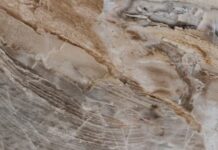







Natural marble remains an important material in architecture and interior design because of its distinctive appearance, versatility and long service life. Its colours, veining and surface finishes allow architects to create spaces with individual character, while its natural composition gives every installation a unique visual identity. Understanding these characteristics helps property owners and designers select stone that suits both the intended appearance and everyday use.
The choice involves more than finding an attractive colour. The origin of the stone, slab dimensions, surface treatment and installation conditions all influence the finished result. Different varieties suit different architectural applications, particularly when flooring, wall cladding, bathrooms and decorative features require a coordinated design. Careful material selection also makes it easier to plan maintenance and preserve the appearance of natural stone over time.
Spanish marble and its role in contemporary architecture
The international appreciation of Spanish marble reflects the country's established tradition of natural stone extraction and processing. Spain has important quarrying areas, particularly in Alicante and other regions with extensive limestone and marble deposits. These resources provide a broad selection of colours and textures for residential properties, commercial interiors and architectural developments.
One of the most recognisable Spanish stones is Crema Marfil, which originates from the Alicante area and features warm beige tones with subtle variations in its natural pattern. Its appearance makes it suitable for spacious interiors, particularly where designers want to create visual continuity between floors, walls and architectural details.
The versatility of Spanish natural stone allows the same material to serve several architectural purposes. Large-format flooring, staircase coverings and decorative wall panels can share a consistent colour palette while incorporating different surface finishes. This approach creates a coordinated interior without requiring every element to have an identical texture or appearance.
How geological origin influences appearance
Natural stone develops through geological processes that determine its mineral composition, colour and internal structure. Marble forms when limestone or dolostone undergoes metamorphism, while many commercially recognised decorative stones retain a sedimentary structure. These distinctions explain why products sold within the natural stone market can display different physical characteristics.
Mineral impurities and geological conditions also contribute to the veining and colour variations visible across individual slabs. Consequently, each piece of natural stone has its own pattern, even when several slabs originate from the same quarry. Examining these differences helps designers create balanced surfaces and select pieces that complement one another.
How to choose marble slabs for architectural projects
The decision to Buy marble slabs for flooring, countertops or wall coverings should begin with an assessment of the intended application. Slab thickness, dimensions, finish and visual consistency are important considerations because they affect fabrication, installation and the overall appearance of the completed surface.
Large slabs are particularly useful when a design requires broad, uninterrupted areas of natural stone. They can reduce the number of visible joints on walls and countertops, creating a cleaner architectural composition. However, the dimensions must correspond to the available installation space, handling requirements and structural support.
Selecting slabs from the same production batch can improve colour and pattern consistency, especially across extensive floors or adjoining wall sections. Since natural materials vary, reviewing the actual pieces before fabrication provides a clearer understanding of their appearance than relying exclusively on photographs or small samples.
Surface finishes and their practical applications
A polished finish produces a reflective surface that highlights colour depth and natural veining. This treatment is common on decorative walls, countertops and interior features where light reflection contributes to the design. Its smooth appearance can enhance the visual impact of darker stones and materials with pronounced mineral patterns.
Honed marble offers a softer, matte appearance with less reflection. It is frequently selected for contemporary interiors and surfaces where a restrained finish is preferred. Brushed and textured treatments introduce further possibilities, although the suitability of each finish depends on the stone, its location and the expected conditions of use.
For flooring, the appropriate surface treatment also depends on slip-resistance requirements, particularly in entrances, bathrooms and other areas exposed to moisture. Technical specifications should therefore form part of the selection process alongside colour and texture. This ensures that the chosen material supports both the architectural design and the practical needs of the space.
White marble and the importance of natural colour
The popularity of White marble in interior design comes from its ability to create bright, visually spacious environments. White and pale-toned natural stones reflect light effectively, making them particularly suitable for bathrooms, entrance halls and living areas where a light colour palette forms the basis of the design.
White marble includes several varieties with different background tones and veining patterns. Some have a relatively uniform appearance, while others display prominent grey or coloured veins. Crema Marfil, although associated with pale architectural finishes, belongs to the beige and cream colour family rather than the category of pure white marble.
Distinguishing white marble from cream-coloured stone is essential when coordinating materials. White surfaces often complement cool grey finishes and contemporary metalwork, whereas beige varieties work naturally with timber, warm lighting and earth-toned interiors. Both approaches can create coherent spaces when the surrounding materials share a considered colour scheme.
Combining pale stone with architectural materials
Light-coloured marble can form an effective background for furniture, timber elements and decorative metal finishes. In kitchens, pale stone surfaces often complement natural wood cabinetry, while bathrooms can combine marble wall coverings with ceramic fixtures and carefully positioned lighting.
The direction of the veining also influences the appearance of larger installations. Adjacent slabs may be arranged to create continuous patterns or symmetrical compositions, depending on their natural markings. This technique requires planning during fabrication, as the position and orientation of each slab determine the final visual arrangement.
Travertine as an alternative for natural stone interiors
Travertine offers another approach to architectural surfaces through its characteristic texture and earthy colour palette. This sedimentary limestone forms through the precipitation of calcium carbonate, commonly around mineral springs. Its formation produces natural cavities and layered patterns that distinguish it from many other decorative stones.
The material commonly appears in ivory, beige, cream and brown tones, making it suitable for interiors that emphasise natural textures. Its distinctive structure creates visual interest across walls and floors, particularly when designers select finishes that preserve the stone's original character.
Travertine can be supplied with filled or unfilled pores, depending on the intended appearance and application. Filled varieties provide a more uniform surface, while unfilled pieces retain the visible cavities associated with the stone. The appropriate treatment depends on installation conditions, maintenance requirements and the desired architectural effect.
Where travertine works particularly well
Travertine is frequently used for wall cladding, flooring, staircases and architectural features. Its warm colours complement timber, plaster and other natural materials, making it relevant to both traditional and contemporary design schemes. Different cutting directions can reveal linear patterns or more irregular markings within the same type of stone.
Exterior applications require particular attention to climate, exposure and technical performance. Suitable material selection, installation methods and surface treatments help accommodate these conditions. For wet areas and outdoor paving, the specified finish and tested slip resistance should match the intended use, rather than relying on the stone's appearance alone.